At times like this, the outside view of the Gulf can become very distorted.
From a distance, it is easy for businesses to assume that uncertainty means slowdown, or that caution means retreat. What came through clearly in our recent webinar with Gulf Market Signals, Astrolabs and Founders Law was something more nuanced and far more useful than that.
The businesses already operating in the region are not stepping away. They are tightening execution, adjusting timelines, and making more deliberate decisions about how they enter, hire and deploy capital. But the long-term commitment to the GCC, particularly Saudi Arabia and the UAE, remains strong.
That distinction matters. Because if you are a founder or operator looking at the region right now, the wrong conclusion is “wait until everything feels calmer.” The better question is whether this is the right moment to get more structured, more specific, and more realistic about how you enter.
The long-term confidence is still there
One of the strongest themes from the discussion was that serious businesses are still anchoring around the long game.
They are looking at Vision 2030 in Saudi Arabia. They are looking at major infrastructure and investment milestones like Expo 2030 and the 2034 World Cup. They are looking at the continued release of government tenders, RFP activity, and the level of public commitment to projects that were already in motion. In other words, they are reading this period as a difficult chapter, not a change in direction.
That is important because it explains the split we are seeing in the market.
Businesses that had already made a strategic decision to come are, broadly speaking, still coming. Some are pushing harder. Some are asking to move faster. Some are changing the sequence of how they enter. But very few are saying the opportunity has disappeared.
What is changing is not strategy. It is execution.
The market is not frozen. It is sorting people by readiness.
That was another useful takeaway from the webinar.
If you group businesses into three rough buckets, the pattern becomes easier to understand.
The first group is companies that already had a plan, budget, and a reason to be in the region. They are continuing. These are often larger operators, repeat international expanders, or businesses that have already decided the GCC is strategically important. They may be tightening hiring or staging spend more carefully, but they are still moving.
The second group is businesses that were exploring, but had not yet fully committed. These are the companies pausing a little, reassessing timing, or asking whether they should sequence things differently. Not because the opportunity has disappeared, but because they were not yet far enough along to justify pushing ahead blindly.
Then there is a third group, and this is where it gets interesting. These are the companies that now look “paused,” but in reality were probably not market-ready in the first place. They had interest, maybe some conversations, maybe broad enthusiasm for the region, but not enough real traction or operational clarity to move confidently.
Periods like this expose that difference very quickly.
What operators on the ground are actually seeing
One of the most useful things about the session was that it did not stay theoretical. It was built around live client portfolios and current activity, which makes the signal more valuable than generic market commentary.
From Astrolabs’ side, the message was pretty clear. Inbound interest from companies wanting to enter Saudi Arabia and the UAE has not collapsed. Companies with a real plan are still asking how to get set up, and in many cases they are trying to accelerate that process rather than delay it. Government portals are still active. Tenders are still being released. Contracts that were expected this month are still being awarded.
That does not mean nothing has changed. It means that serious companies are treating the region as active, not closed.
The same came through from James Bott’s perspective at Emerald. Long-term, the Middle East still sits firmly on the map as a growth market for venture-backed and private equity-backed technology vendors. Some hiring has paused. Some roles now require an extra layer of CEO approval. But in several cases, even after that pause, the decision has still been to proceed because the role is seen as too important to delay.
That is not the behaviour of businesses that are leaving the region. It is the behaviour of businesses making sure they deploy carefully.
The GCC is not one market, and that still catches people out
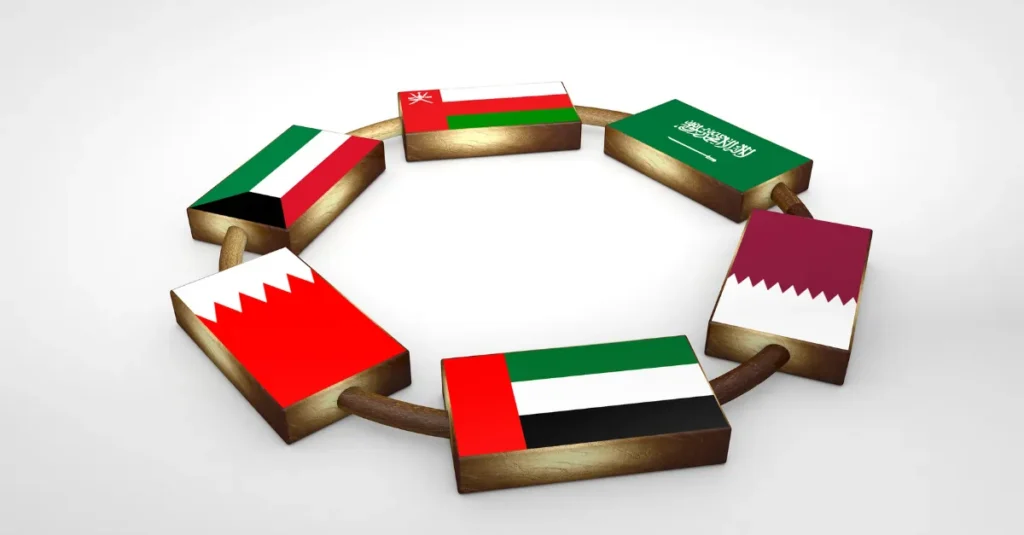
One point worth underlining from the webinar is that founders and operators outside the region still tend to talk about the GCC as though it is one market with one rhythm.
It isn’t.
Saudi Arabia and the UAE are not interchangeable. Their pace is different. Their commercial environment is different. The procurement paths are different. The way relationships are built can be different. Even when businesses plan for both, they need to think more carefully about what they are actually trying to do in each one.
That matters in periods of uncertainty because it becomes even more important to understand where demand is strongest, where the buying motion is clearest, and where your team can get the best return on effort. Treating the Gulf as one undifferentiated region tends to lead to vague execution. Vague execution is expensive in any market, but especially here.
Founders are not all reacting the same way either
Edward Jennings from Founders Law brought a really useful founder lens to the conversation.
What founders are doing right now depends heavily on maturity and context.
Some companies that were already mid-setup in the GCC are carrying on. Their strategy was already defined, the capital was already committed, and the region already mattered to their growth story. For them, there is no obvious reason to pull back.
Others are shifting sequence rather than cancelling plans. That is a more interesting category. These are founders who still believe in the opportunity, but are changing the order of operations. Instead of relocating a full team now, they may set up the entity first and move the team later. Instead of committing to the full structure immediately, they may use EOR to place someone on the ground and start landing deals before they relocate others.
That kind of behaviour is usually a good sign. It suggests a founder is still committed, but is thinking clearly about risk and timing.
The businesses that tend to struggle most are not the ones being cautious. They are the ones who had not really worked out what the market was going to require from them in the first place.
The companies doing best right now are using this time to get ready
This was one of the most practical messages from the webinar.
The companies that are handling this period well are not sitting still. They are using the time to tidy what would otherwise slow them down later.
They are setting up entities where that still makes sense. They are cleaning up governance. They are fixing cap table issues. They are mapping hiring plans properly. They are deciding which parts of the team really need to be in market first. They are preparing for commercial execution instead of waiting for a perfect moment that never really comes.
That is the kind of work that gives a business first-mover advantage when conditions settle.
There was a strong line in the discussion about this. The companies likely to do best are the ones that are ready to move as soon as the market allows them to, not the ones that are still trying to make basic decisions at that point.
Hiring has become more selective, not less important
There was a useful nuance in the hiring discussion too.
Companies already established in the region are still hiring locally. What has slowed, in some cases, is relocation from Europe, the UK and the US. That makes sense. Moving people physically is a bigger personal and operational commitment than local hiring, and some businesses are sensibly delaying that until visibility improves.
But local hiring itself remains active, especially where the role is strategically important.
That matters because it reinforces a point Emerald sees often: when a market still matters commercially, the right hire still gets approved. The question becomes whether you use a local hire, an internal relocation, or an EOR-supported entry route as the first move.
That is exactly the kind of decision companies should be making more deliberately right now.
This is still a relationship market
If there was one theme that sat underneath almost everything else, it was this: the GCC still runs on relationships.
That is true in calmer periods and it remains true in more uncertain ones. The businesses that stay close to their partners, clients and ecosystem contacts tend to be the ones that maintain momentum best. The ones that keep showing up, keep talking, keep delivering, and keep demonstrating commitment are usually in a far better position than those waiting on the sidelines for a perfectly clean moment to arrive.
This is one reason why in-market presence still matters, even if the form of that presence changes. It does not always mean full entity setup on day one. But it does mean that the region rewards visible commitment and punishes detachment.
For companies thinking about entering now, that should shape the plan. It is not just about being operationally ready. It is about being credibly committed.
So what should companies actually do now?
If you are already operating in the GCC, the message from the webinar was not to retreat but to execute more intelligently. Tighten your priorities. Reassess how your teams are deployed. Stay close to clients. Keep delivery strong. Focus on the things you can control.
If you are planning to enter, this is not necessarily the time to stop. It may be the time to get ready properly. Setup in Saudi Arabia is not quick. Entity formation, visas, hiring, and operational readiness all take time. For companies that already know the market matters, using this period to structure well can be a genuine advantage.
And if you are still at the “we might want to be there one day” stage, that is fine too. But be honest about where you are. This region will reward readiness, focus and long-term intent. It is not a place where vague interest turns into easy wins.
The real takeaway
The Gulf story has not changed. What changes in moments like this is the quality of execution.
The strongest businesses are not confusing a difficult chapter with a broken opportunity. They are not abandoning the region. They are adjusting, sequencing differently, managing burn more carefully, and making sure that when they move, they do it with more clarity than before.
That is probably the most useful conclusion a founder can take from this.
Not “should we come?”
But “if we come, are we doing it properly?”
If you want help
Emerald supports technology companies expanding into the region with EOR and talent solutions that allow teams to hire, operate and build commercial presence without rushing into the wrong structure.
Book a 30-min GCC expansion review